- The 254 Report
- Posts
- Kenya Launches the SRI Synergy Blueprint to End Two Decades of Science and Innovation Fragmentation
Kenya Launches the SRI Synergy Blueprint to End Two Decades of Science and Innovation Fragmentation

Gerald Kombo
March 18, 2026
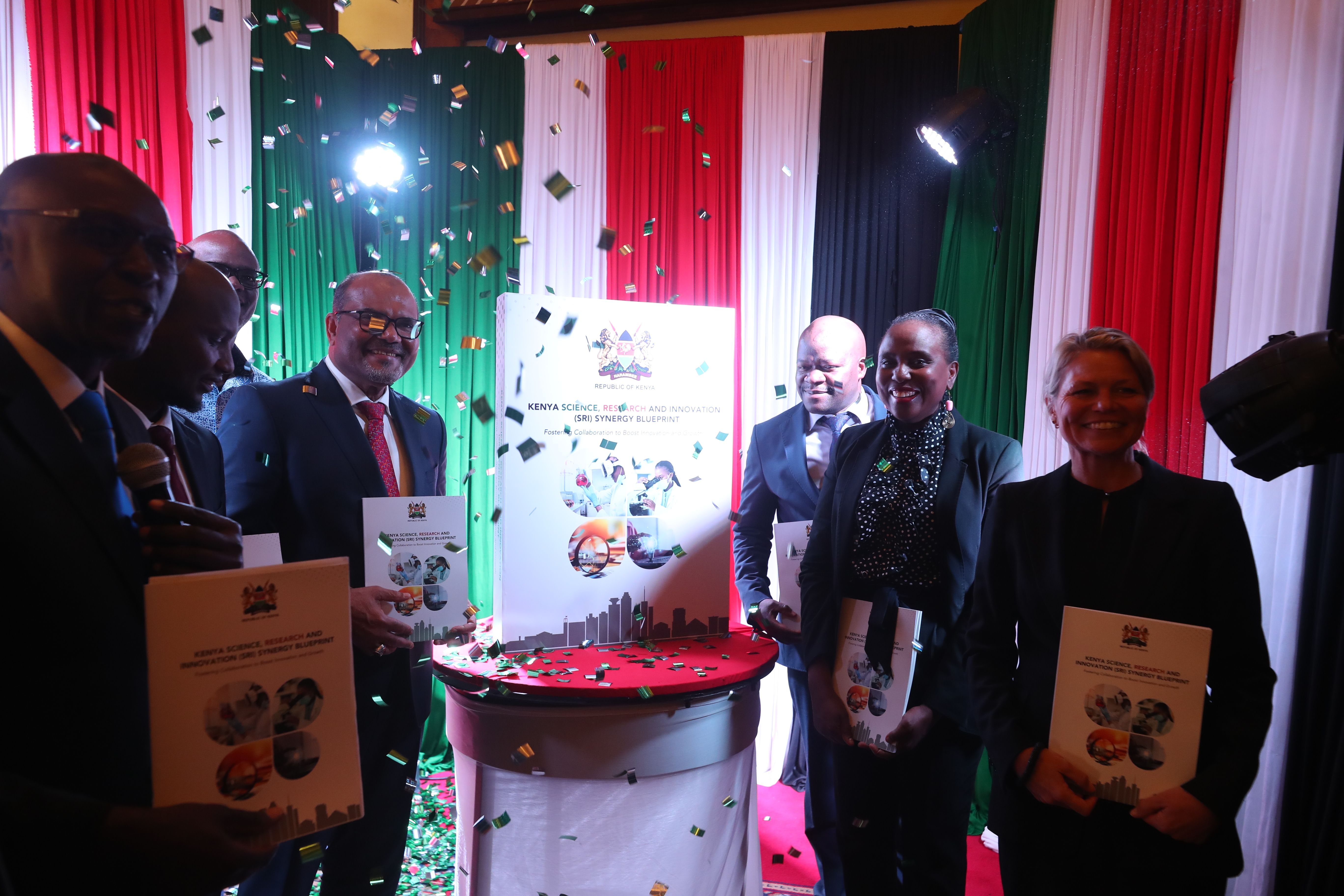
Photography: Henry Naminde
Convened by the State Department of Science, Research and Innovation. Implemented by the African Population and Health Research Center. Funded by the UK Foreign, Commonwealth and Development Office.
Kenya officially launched the Kenya Science, Research and Innovation Synergy Blueprint this morning at Safari Park Hotel, Nairobi. Cabinet Secretaries, Principal Secretaries, Vice Chancellors, ambassadors, development partners, state agency CEOs, county representatives, private sector leaders, the Gates Foundation, and the British High Commission Nairobi were all in the room.
Prof. Shaukat Abdulrazak, EBS, Principal Secretary for the State Department of Science, Research and Innovation, represented His Excellency Dr. Musalia Mudavadi, EGH, Prime Cabinet Secretary and CS for Foreign and Diaspora Affairs, who was out of the country on official duties. He asked permission to add his own voice to the speech. The answer was yes.
Why This Blueprint Exists
The Blueprint emerged from a process that started in November 2025. More than 200 stakeholders were pulled into regional consultations across Nairobi, Mombasa, Kisumu, and other regions. What the data showed was uncomfortable.
Kenya spends 0.78% of its GDP on research and development. The African Union target is 1%. Kenya's own national ambition is 2%. Fewer than 1,000 doctorate graduates are produced annually against a target of 1,000 to 2,400 PhDs per year, with an aspiration of 100 PhDs per million population by 2030.
70% of Kenya's researchers are inside universities. Yet universities hold less than 2% of national equipment value. The bulk of scientific infrastructure sits locked inside state agencies, often inaccessible for training or research. Only 16.7% of Kenyan institutions have functional commercialization offices. Kenya publishes papers but does not yet produce products at scale.
On the Global Innovation Index, Kenya slid from position 77 to 102. Not because the talent is absent. Because fragmented data systems cannot consolidate what is being achieved.
"Kenya does not lack power. Kenya does not lack institutions. What is lacking is effective coordination and purposeful synergy across our ecosystem."
Prof. Shaukat Abdulrazak, EBS
The Five Strategic Pillars
The Blueprint is structured on the IDEA Framework, adapted for Kenya's SRI ecosystem across five strategic pillars.
Pillar One: Policy, Governance and Coherence
The Blueprint proposes amendments to the Science, Technology and Innovation Act to remove mandate overlaps between NACOSTI, NREF, the Kenya National Innovation Agency, and the Commission for University Education. An Inter-Ministerial Science, Research and Innovation Coordination Committee will provide oversight architecture. National thematic think tanks and expert panels will be established on priority SRI clusters.
The Blueprint also insists that ministries conducting their own research must formally coordinate with the State Department of Science, Research and Innovation, ending decades of parallel, disconnected research agendas that compound duplication of effort.
Pillar Two: Strategic Funding and Investment
If Kenya's GDP grows at 5% annually and reaches USD 182 billion by 2031, the funding picture shifts entirely depending on the commitment level.
At the current 0.78%, R&D expenditure reaches approximately USD 1.42 billion by 2031. Scaling to 1% of GDP pushes that to USD 1.82 billion. Reaching Kenya's stated 2% ambition unlocks USD 3.65 billion in annual R&D investment by 2031.
Prof. Shaukat Abdulrazak told the room he would be presenting these figures to parliamentarians that same afternoon. He said the question keeps coming back: does Kenya have the capacity to absorb the investment?
"Without a blink of an eye, my answer is yes. Because we know what we can be able to do. This fund is not meant for the state department. It is to look at the entire ecosystem. Looking at universities, research institutions. I am going all the way to secondary schools."
Prof. Shaukat Abdulrazak, EBS
The Blueprint calls for a structural shift from short-term, fragmented project funding to multi-year pooled financing, bringing government, development partners, and private sector into shared funding mechanisms.
Pillar Three: Human Capital and Infrastructure
Kenya must professionalize research career paths, protect researchers from heavy teaching workloads, and radically scale up postgraduate production. A National Shared Research Infrastructure Framework is proposed, ensuring expensive equipment locked inside state agencies becomes accessible to university researchers and students.
Centers of excellence will expand beyond Nairobi to nodes across Western, Eastern, Northeastern, and Central Kenya. The question the Blueprint forces onto the table is direct: if university students cannot access the equipment they need, how much of their training is theory rather than practice?
Pillar Four: Academia-Industry-Government Collaboration
Kenya's research currently follows a supply-driven model. Institutions produce research based on what they find interesting or fundable, not what industry needs. The Blueprint calls for a demand-driven pivot where industry problem statements shape research agendas.
Innovation hubs are concentrated around Nairobi, leaving regions like the Northeast underserved. The diaspora remains largely untapped. The Blueprint explicitly proposes diaspora engagement frameworks, science parks, and cluster-driven collaboration platforms as structural solutions.
Pillar Five: Data and Digital Infrastructure
What was described during proceedings as "data darkness" is the fifth pillar's primary target. Research outputs, institutional capacities, and funding flows are so fragmented that no consolidated national picture exists.
Proposals include a National SRI Observatory for real-time intelligence, sovereign data governance frameworks, national data repositories, tiered high-performance computing hubs, green data infrastructure, digital skills development for researchers, and open access governance.
This pillar connects directly to what APHRC demonstrated one week earlier at the 2nd East Africa Data Governance Conference at the Hyatt Regency Nairobi Westlands, where their DASA platform showed what African-controlled data infrastructure looks like when it is operational, not aspirational.
Read the full account: EA Data Governance Conference 2026: Is Kenya AI-Ready?
The Implementing Partner: APHRC's Expanding Footprint
Dr. Catherine Kyobutungi, Executive Director of APHRC, gave the day's most quoted framing. She noted that APHRC has been in Kenya's SRI ecosystem for more than 25 years and is not leaving.
"The SRI ecosystem is like cooking a delicious stew. Some of us are the chicken, some of us are the cherry tomatoes bringing color, and others are the salt and the spices. We cannot all be the dish. Synergy is the recognition that we all play different roles."
She committed APHRC's resources, expertise, and what she called courage to the implementation phase ahead.
"In a world where we don't have the resources, we actually need courage to share."
Dr. Catherine Kyobutungi — Executive Director, APHRC
The 254 Report has tracked APHRC's growing national influence across sectors. Previous coverage:
The UK Commitment
Rosie Cave, Deputy High Commissioner of the British High Commission Nairobi, confirmed the UK's commitments under the UK-Kenya Strategic Partnership signed by President William Ruto and Prime Minister Keir Starmer in July 2025.
Targets confirmed for the five-year partnership:
30,000 digital economy jobs created in Kenya
£100 million in investment mobilised
500 startups supported
5,000 digitally-enabled SMEs built over five years
A UK-Kenya AI Partnership generating over 50 locally-led AI use cases while strengthening AI ethics and data protection
A low-cost, secure digital remittance system for the Kenyan diaspora, supporting financial inclusion and intra-African trade
"Take this Blueprint with you," Rosie Cave told the room as she closed.
Kenyans Honoured in the Room
Prof. Shaukat Abdulrazak singled out two Kenyans during his address as proof of what is already possible when talent meets enabling conditions.
Prof. Mary Abukutsa-Onyango, the 2025 winner of the African Food Prize, honoured for decades of work on indigenous African vegetables and food sovereignty. She was present in the room.
Eli Sabatia, the 2025 winner of the Africa Prize for Engineering Innovation, recognised for developing TAC 360, an AI-powered application that translates real-time speech into sign language in real time.
Both prizes are continental honours. Both are Kenyan. Both were achieved inside a system that, by the Blueprint's own admission, is fragmented and under-resourced. Imagine what becomes possible when the system actually works.
The PS Who Said It Plainest
PS Michael DeMassimo, representing a Cabinet portfolio at the event, delivered his own assessment without ceremony.
"What is our hurt? That we spend only a mere percent of GDP on research and development. We produce less than 3% of our target PhDs annually. 70% of researchers are in universities, but universities hold less than 2% of the national equipment value."
He referenced China's Vegetable Basket Project, launched in the 1980s, as a case study in what happens when a government invests in commercialized research persistently and at scale.
"The SRI ecosystem is like cooking delicious stew. You cannot all be the meat. Some must be the tomatoes, the funders. The spices, the innovators. And the salt."
The Commitment That Cannot Be Walked Back
From the Prime Cabinet Secretary's speech, delivered in the room by Prof. Shaukat Abdulrazak, one statement carried more weight than any figure presented during the day.
"This blueprint must not join the long list of visionary policy documents that have been launched with great ceremony and consigned thereafter to institutional archives. That outcome is not acceptable. It will not be permitted."
His Excellency Dr. Musalia Mudavadi, EGH — Prime Cabinet Secretary, delivered by Prof. Shaukat Abdulrazak
An Inter-Ministerial Science, Research and Innovation Coordination Committee will provide national coordination architecture. A monitoring and evaluation system with digital dashboards and regular public reporting will track progress transparently. Accountability will be structural, not aspirational.
The Three-Phase Road Ahead
The Blueprint's implementation runs across three phases: stabilisation of the SRI ecosystem, structural reforms across governance, funding, and infrastructure, and full transformation into an innovation-led economy. Enablers include political commitment, pooled financing, commercialization pathways, SRI human resource pipelines, and unified data intelligence.
Kenya is the sixth largest economy in Africa with a GDP of approximately USD 136 billion. 75% of the population is under 35. The country is known across the continent as the Silicon Savanna. Four years remain until Vision 2030.
The SRI Synergy Blueprint is a bet that Kenya can stop consuming technologies developed elsewhere and start producing its own. The room chose to believe implementation will match ambition.
Dr. Catherine Kyobutungi closed with the line she said she uses in every forum.
"The best way to predict the future is to create it."
Dr. Catherine Kyobutungi — Executive Director, APHRC
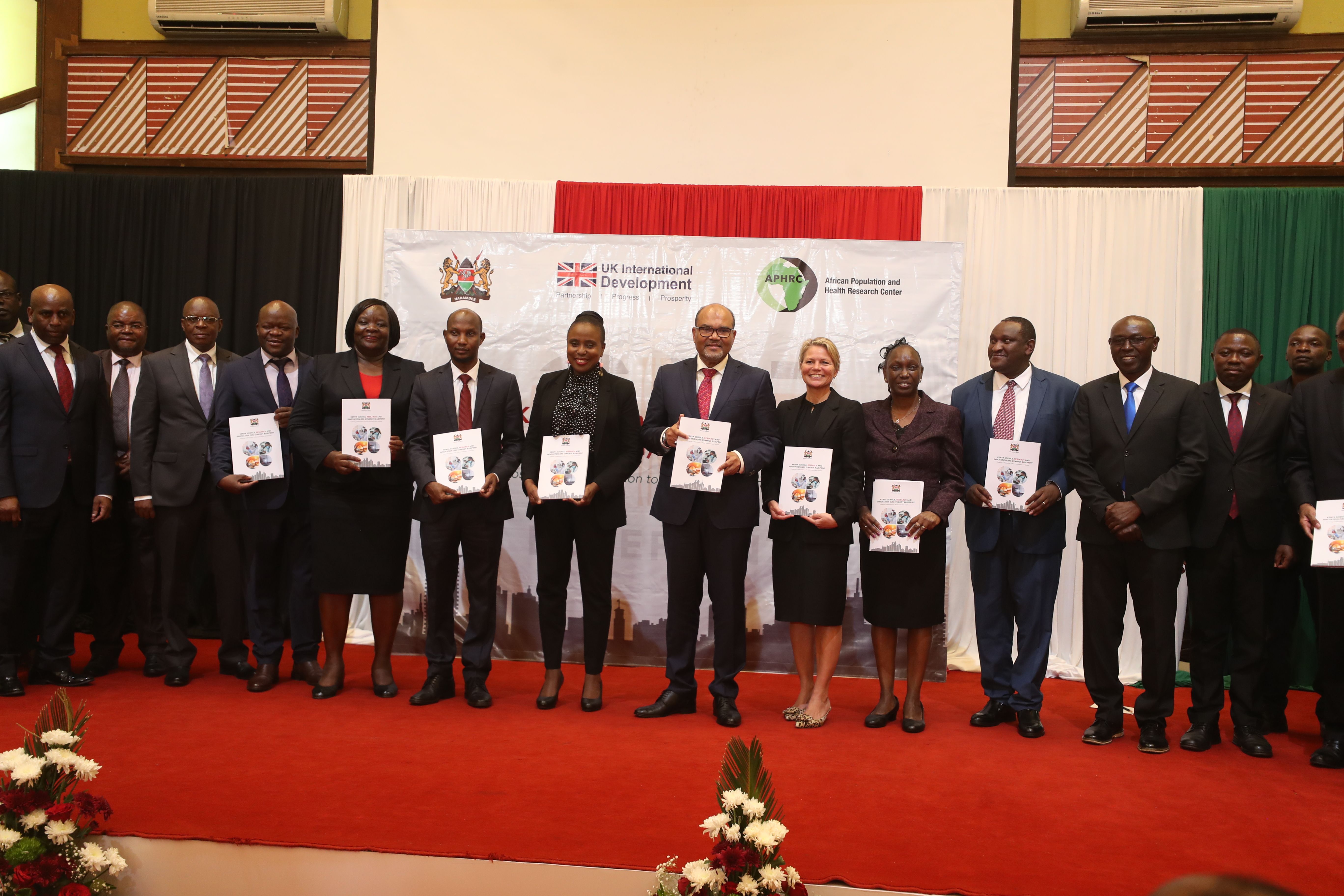
Reported by The 254 Report from the official proceedings of the Kenya SRI Synergy Blueprint launch at Safari Park Hotel, Nairobi, March 18, 2026. The coverage was always the point.
Reply